
The Chemical Loading Station Building Set turns 719 pieces into a focused logistics scene. Its included tanker truck, elevated storage tank, pipework, valves, loading platform, workers, warning signs, and road-style base make the story readable without needing a huge display.
This article explains six scene details and how to arrange them for building, display, and photography. It is based on the current Chemical Loading Station product listing. It does not describe real chemical handling or safety procedures.
-1024x.jpg?w=1024&h=1536)
Six Details That Carry the Scene
1. Tanker truck
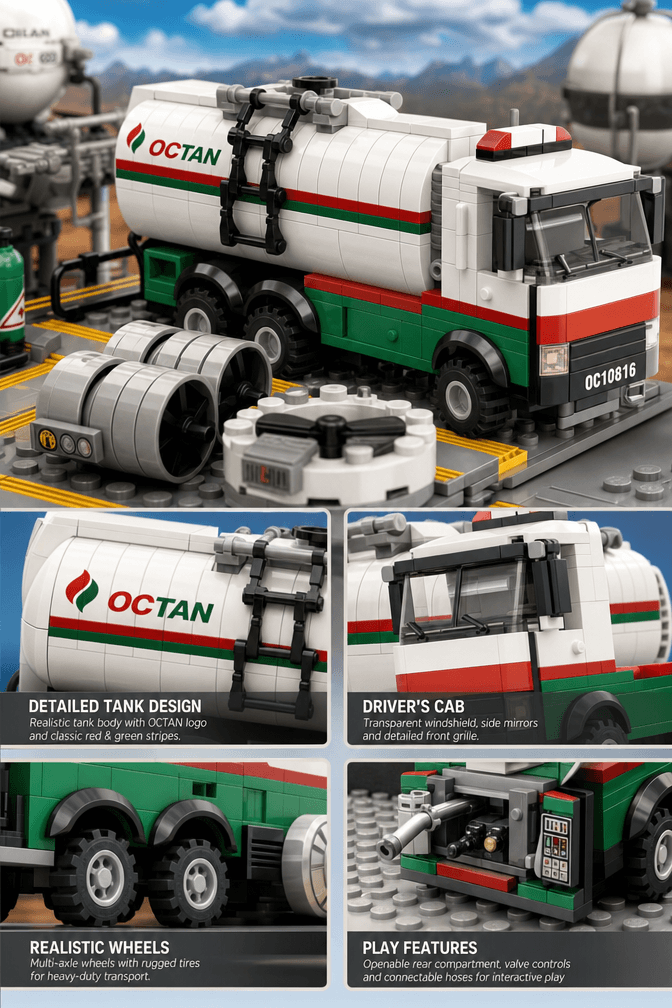
The included vehicle gives the scene a clear purpose and provides a movable element for different display arrangements.
2. Elevated tank
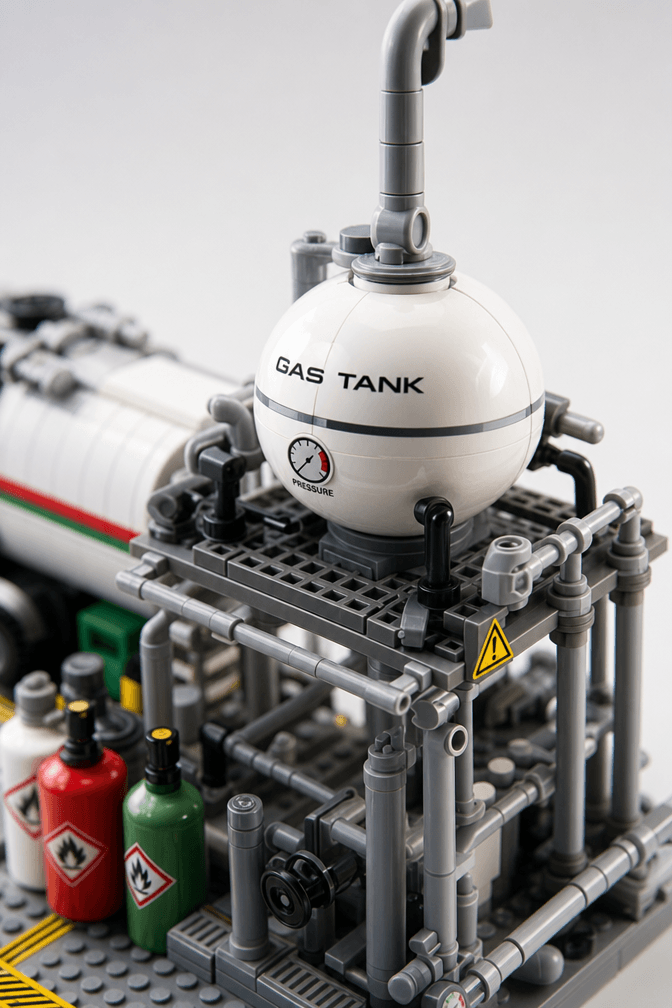
The large vessel becomes the architectural anchor. Its height separates the station from a flat roadway layout.
3. Pipework and valves
Connected industrial details lead the eye between the tank and loading platform. They are visual representations, not functional plumbing.
4. Loading platform
The platform creates a focal interaction point between facility and vehicle, helping the model tell a compact logistics story.
5. Workers and signs
Figures and warning graphics add human scale. They are decorative context and should not be read as a real safety plan.
6. Road-style base
The base gives the tanker a defined route and makes it easier to connect the station to a city or industrial district.
How to Organize the Build
- Reserve two zones. Keep one area for the fixed station and another for the tanker truck so parts from the two assemblies do not mix.
- Sort small industrial details. Place valves, railings, signs, and tiny connectors in shallow trays.
- Build from the base upward. Follow the included instructions, confirming the road edge and platform footprint before adding the tank.
- Finish the truck separately. Test its wheels on a clean flat surface, then position it beside the loading point.
- Do a final visual check. Compare pipe alignment, railings, signs, and worker accessories with the guide.
Check the Footprint Before Choosing a Shelf
| Specification | Current listing | Planning note |
|---|---|---|
| Finished size | 10.43 × 7.72 × 7.60 in | Allow extra space for the tanker position |
| Package size | 12.01 × 9.84 × 2.76 in | Useful for gift and storage planning |
| Piece count | 719 pieces | Use multiple trays during assembly |
| Age guidance | 8+ | Adult guidance may help younger builders |
A front-facing setup emphasizes the loading platform. A three-quarter view shows more of the road base and truck. If the station sits beside another model, keep the tanker route visually open so the scene does not feel blocked.
Connect It to a Larger Industrial District
The road-style base makes the station a useful transition between fixed infrastructure and vehicles. Place it near the Oil & Gas Storage Station for a storage-and-dispatch zone, or contrast its compact tanker scene with the taller Modular Oil Refinery.
If you want a different storage silhouette, compare the cylindrical tank and solar canopy in the Natural Gas Storage Center. The Engineering & Sci-Fi collection brings the available industrial scenes together.
What This Model Does and Does Not Represent
The model uses familiar industrial forms to create a fictionalized loading scene. It can support imaginative city layouts and conversations about how visual design communicates a facility's purpose. It cannot demonstrate real loading, chemical transfer, hazard control, or emergency procedures. Treat every pipe, valve, sign, and worker position as decorative storytelling.
Explore the Loading Station
Check the current gallery, specifications, availability, and ordering details on the product page.
Product details were checked against the Wonder Mini World listing on September 26, 2026. Specifications and availability may change. This decorative model is not real chemical or industrial equipment.