
A useful toddler activity does not have to fill an afternoon. With a small play area, a clear prompt, and a visible finish line, soft blocks can turn ten minutes into a focused stretch of building, sorting, squeezing, or storytelling.
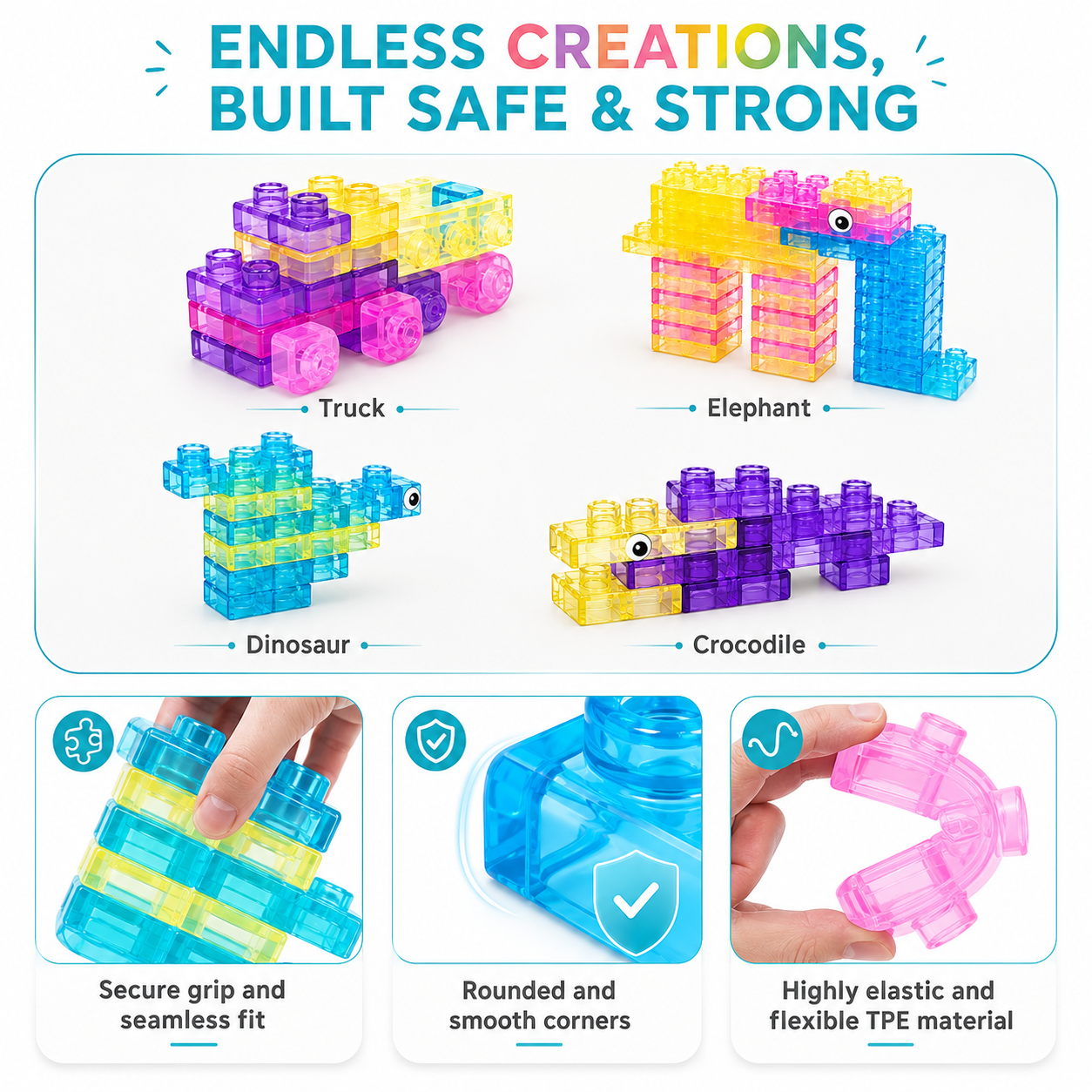
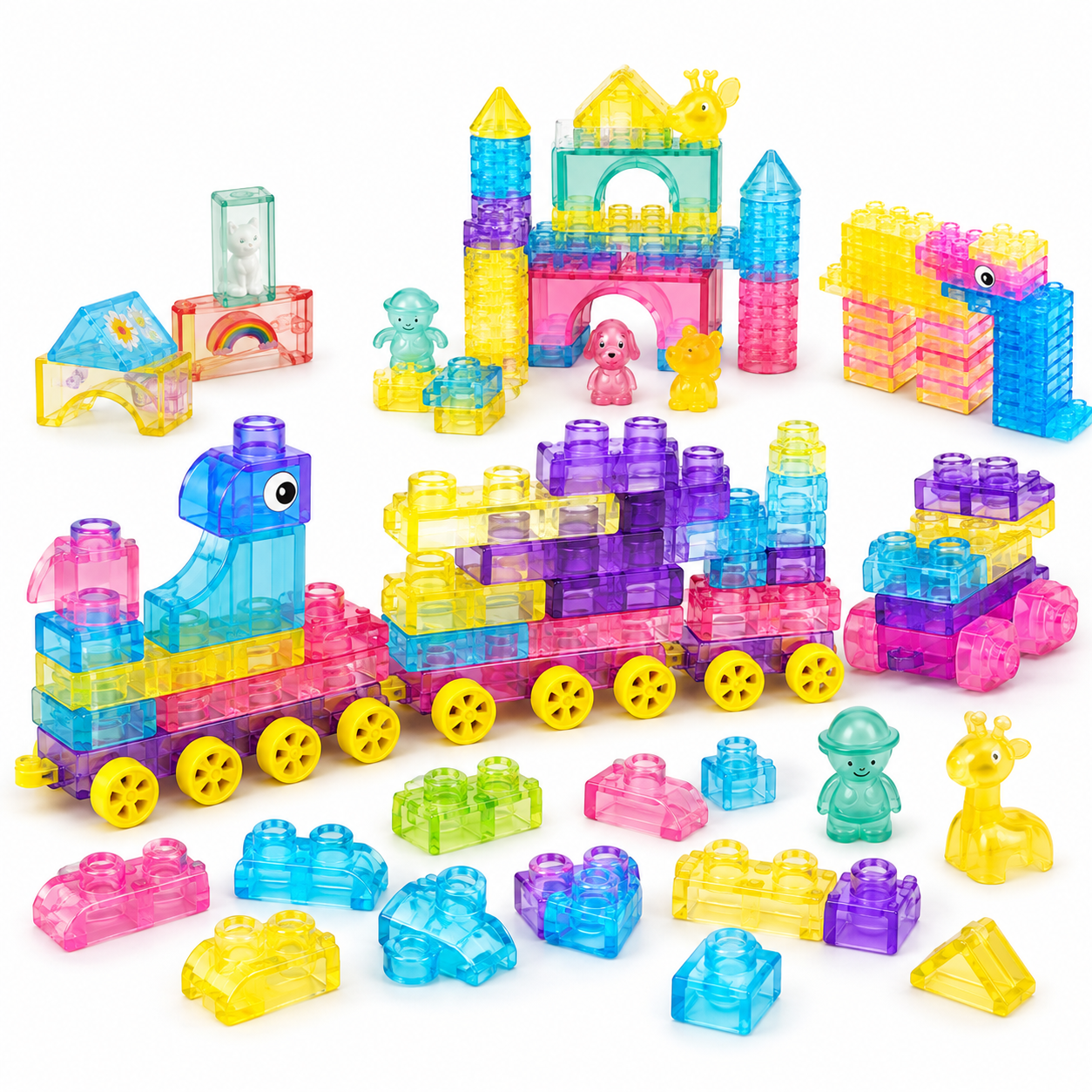
This guide is built around the current Soft Jelly Building Blocks for Toddlers. The listing describes a 40-piece set made from flexible TPE, designed for ages 3+, with colorful pieces that can be squeezed, twisted, stacked, connected, floated in water, and pressed onto a wet tub wall. A storage box is included.
- Minute 1: place only the pieces needed for one prompt.
- Minutes 2 to 8: demonstrate once, then let the child repeat or change the idea.
- Minutes 9 to 10: name the finished build and return every piece to a tray or box.
Why Use One Small Prompt at a Time?
Putting all 40 pieces on the floor can be exciting, but it can also make the starting point unclear. A short prompt gives the child one visible action: copy two colors, make a low tower, connect a path, or place shapes on a wet wall. The adult sets the scene without deciding what the final creation must look like.
Keep the language simple. Try “Can you find another red piece?” or “What could live behind this wall?” Avoid correcting a build that looks different from the example. The point is to invite handling and experimenting, not to produce a perfect model.
Seven Soft Jelly Block Games
1. Make a Color Road
Choose two or three colors and connect them into a line. Ask the child to continue the sequence, turn the road, or make it end at a toy animal. For a younger builder, simply finding and naming matching colors is enough.
2. Copy My Squeeze
Hold one block and slowly squeeze, twist, or bend it within its normal range. Invite the child to copy the motion, then let the child become the leader. This game uses the set's flexible texture without requiring a finished structure.
3. Build a Two-Block Pattern
Make a tiny model from two pieces, cover it with a cloth, and ask the child to rebuild what they saw. Begin with color matching, then change the direction or connection. Keep the challenge playful and stop before it becomes frustrating.
4. Give Every Tower a Job
Build three short towers and give each one a pretend purpose: a home, a garage, or a snack stand. Add a small figure from home only if it is age-appropriate. The story makes rebuilding as important as height.
5. Wet-Wall Picture
During supervised bath time, press rinsed blocks onto a wet tub wall. Arrange a simple face, boat, flower, or color band. The product page states that the pieces can stick to wet surfaces, so the wall becomes a vertical building space.
6. Floating Color Rescue
Place a few blocks in the bath and call out one color at a time. The child retrieves the matching piece and attaches it to a small wall picture. Keep every item and the child within arm's reach throughout water play.
7. Pack-Away Sort
Turn cleanup into the final game. Sort pieces by color, shape, or “long and short” before placing them in the included storage box. Change the sorting rule on another day so cleanup still feels like a new challenge.
Adult Role: Narrate, Then Pause
Describe what is happening in plain language: “That piece bends,” “Your path turned,” or “The blue block floated.” Then pause. A short observation often leaves more room for the child to make the next choice than a stream of questions.
Set Up the Session in Four Steps
- Choose one surface. Use a clear tabletop, a play mat, or the wet tub wall. Remove unrelated toys from the immediate area.
- Offer a small selection. Start with six to twelve pieces, depending on the prompt. Keep the remaining pieces nearby for the child to request.
- Model once. Show the action slowly, then hand control to the child. A game may evolve into a completely different build.
- End with a visible reset. Count, sort, rinse if used in water, and return dry pieces to storage.
A Simple Five-Day Rotation
Repeating the same materials with a different prompt reduces setup while keeping the activity recognizable. This sample rotation uses short sessions rather than promising a specific learning outcome.
| Day | Prompt | Adult preparation | Finish line |
|---|---|---|---|
| Monday | Color road | Set out three colors | The road reaches a chosen object |
| Tuesday | Copy my squeeze | Choose four flexible pieces | Each person leads two motions |
| Wednesday | Two-block pattern | Make one sample model | The child copies or changes it |
| Thursday | Tower story | Add one age-appropriate figure | The figure visits three structures |
| Friday | Wet-wall picture | Place a few pieces within reach | Rinse and fully air-dry the set |
Adjust the Games Without Adding More Pieces
If a prompt is too easy, change one variable. Add one color to the pattern, place the model farther away, or ask for a bridge that connects two short towers. If the prompt is too hard, reduce the number of pieces, keep the sample visible, or let the child choose the next color.
For mixed-age play, give the older child a helper role instead of a larger and more complicated goal. They can choose the colors or tell the story while the younger child connects the pieces. Always follow the age guidance on the actual packaging and keep toys intended for older children separate.
Keep the Play Routine Age-Aware
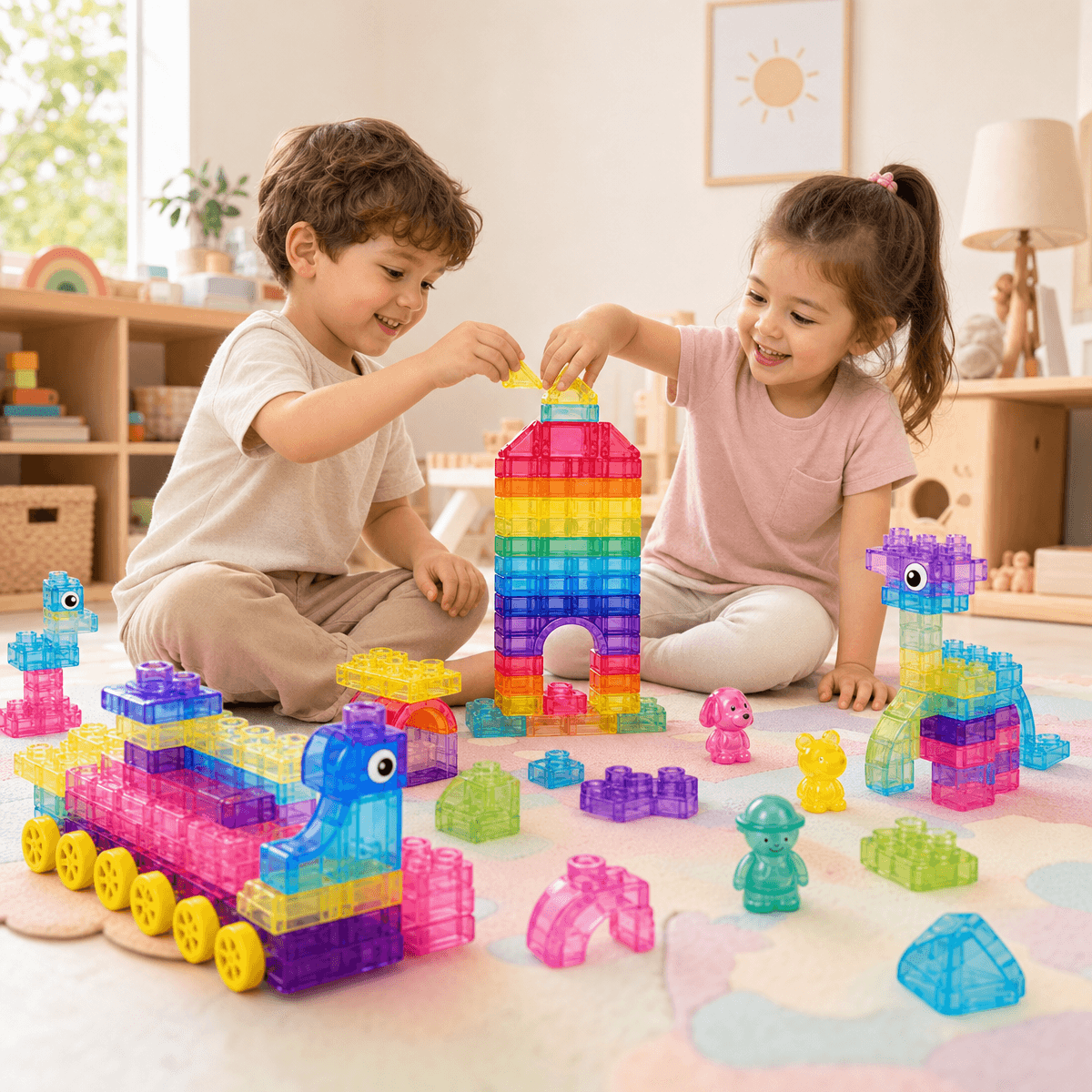
The product listing gives age guidance of 3+ and recommends adult supervision. The U.S. Consumer Product Safety Commission advises caregivers to follow age guidance and other safety information on toy packaging. Inspect pieces before play and stop using any part that is damaged.
For bath activities, supervision is continuous, not occasional. The American Academy of Pediatrics' parent guidance says never to leave a young child alone in the bath, even briefly. Prepare towels and supplies before the child enters the water.
After water play, follow the product care guidance: rinse the blocks and let them air-dry fully before putting them back in the storage box.
Questions Parents Often Ask
Do I need to use all 40 pieces?
No. A short game often works better with a selected group. Keep the rest visible but outside the main activity area.
Can these games be used in the bath?
The wet-wall and floating games can. The current product page describes the blocks as bath-friendly, able to float, and able to stick to wet tub walls. Keep the child within arm's reach.
What if my child ignores the prompt?
Follow the child's idea. The prompt is only a starting point. Narrate what they chose and use cleanup as the session's clear ending.
How should the blocks be stored?
Use the included box only after the pieces are clean and fully dry. Wet pieces need open-air drying first.
Choose One Prompt for the Next Play Session
Review the current set photos and details, then begin with the color road, a two-piece copy game, or a supervised wet-wall picture.
View the Soft Jelly Building BlocksBrowse Kids Building Blocks
Product details were checked on October 6, 2026. Specifications, packaging, care guidance, images, and availability may change. Follow the instructions and age guidance supplied with the actual product.