
A single building set can feel different when its play space changes. Use the same soft blocks at a table, in the bath, and in a portable quiet-time kit, with a simple handoff routine between each zone.
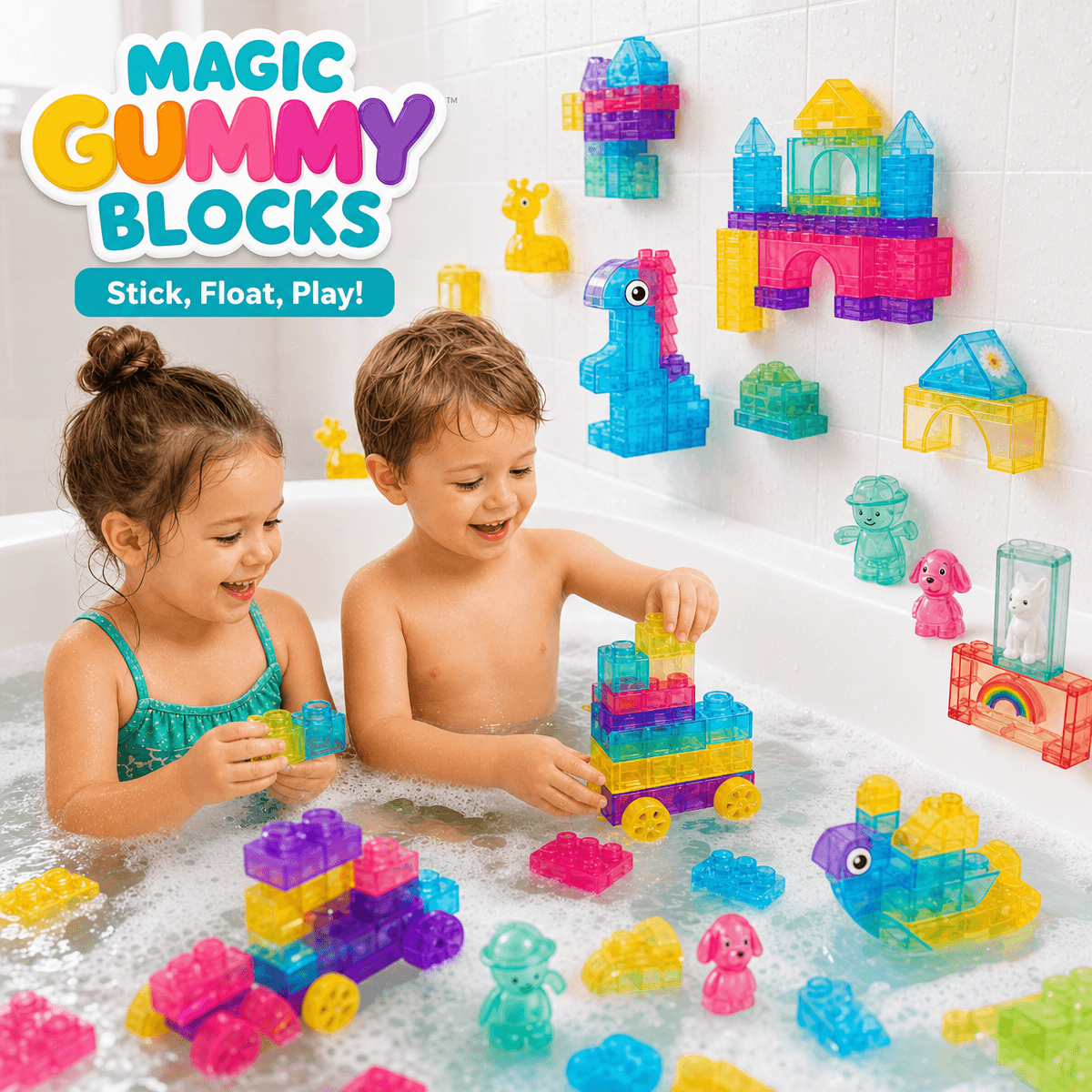
The current Soft Jelly Building Blocks for Toddlers listing describes 40 colorful TPE pieces for ages 3+, plus a storage box. The flexible blocks can be connected, squeezed, twisted, stacked, floated in water, and pressed onto wet tub walls. Those properties make the set suitable for several kinds of play without needing three separate toy bins.
-1.png?w=1200&h=1200)
Begin with a Home Base
Choose one shelf, low cabinet, or adult-managed storage spot as the set's home base. The included box holds the full collection when the pieces are clean and dry. Place a shallow tray beside it for the pieces currently in use. A tray creates a visible boundary on a table and makes it easier to carry a small selection from one room to another.
Keep the routine consistent: box to tray, tray to play zone, play zone back to tray, then tray to box. For water play, add a drying step before anything returns to closed storage.
- Label the box with a simple picture so the storage spot is easy to recognize.
- Use a washable, non-slip tray with a raised edge for the active pieces.
- Count the pieces when leaving a public place or shared room.
- Keep wet and dry pieces separate until the wet pieces have fully air-dried.
Zone 1: A Tabletop Building Station
The table zone is the best place for dry construction because it offers a level surface and clear sight lines. Protect the table if needed, remove cups and food, and start with eight to twelve pieces. The remaining blocks can stay in the open box so the child can request another color or shape.
Use a defined work area
A placemat or tray marks where the build belongs. Keep the edge of the play area away from the edge of the table.
Build across, not only up
Create a road, fence, animal outline, or color band. Low builds are easier to pause and move than a tall tower.
Sort before storage
Ask the child to return one color at a time. Check the tabletop, chairs, and floor before closing the box.
Change one detail tomorrow
Keep the same surface but offer a new starting shape, story character, or color rule.
Zone 2: A Supervised Bath-Wall Station
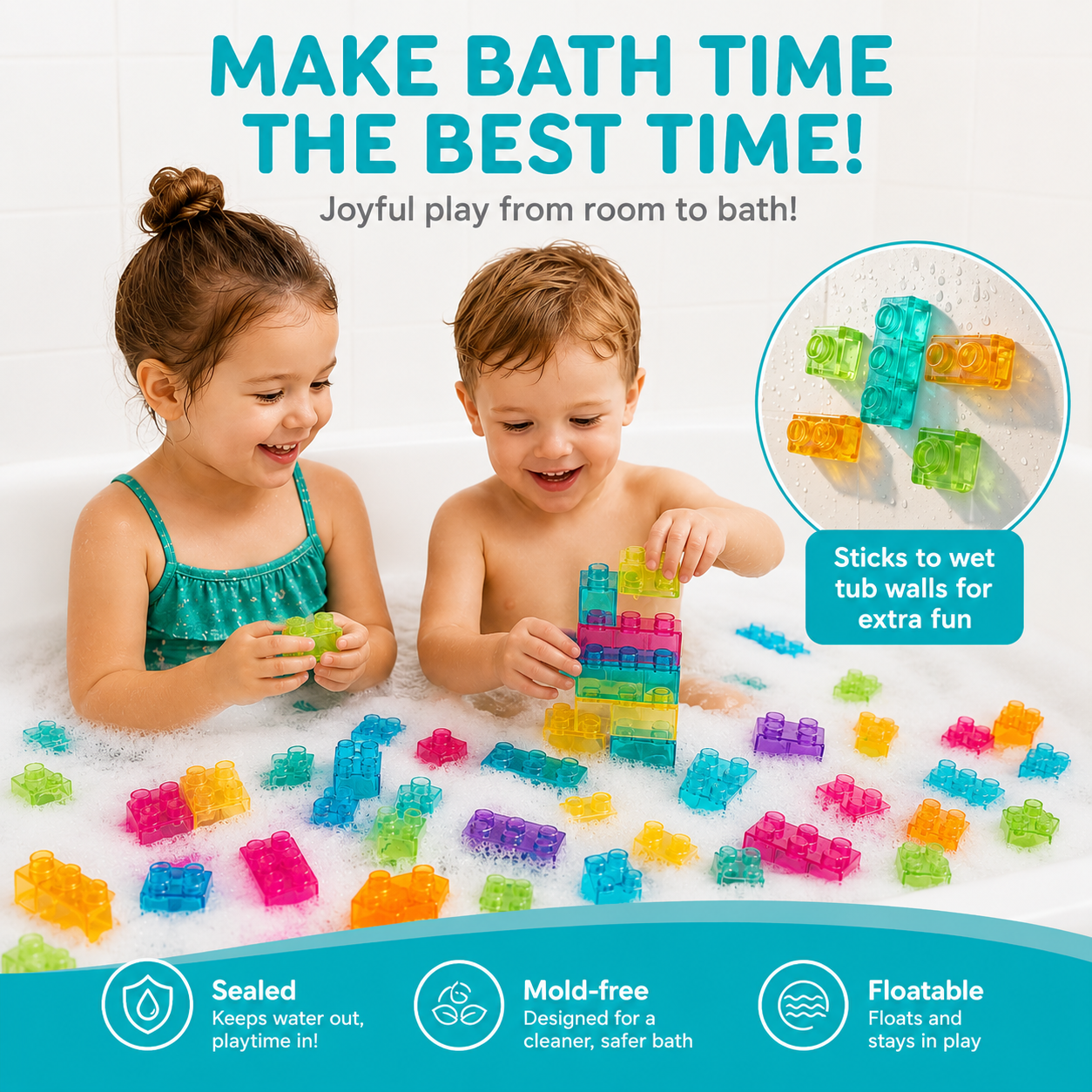
The product page says the blocks can float and stick to wet tub walls. Prepare the zone before the child enters the bath: place a small selection of blocks and all washing supplies within adult reach. Use the wet wall for flat pictures, color groups, short paths, or a simple “above and below” game.
Bath toys do not reduce the need for direct supervision. The American Academy of Pediatrics' bathroom safety guidance says never to leave a young child alone in the bath, even for a moment. If you must leave the room, take the child with you.
- Bring only the number of blocks you can easily see and retrieve.
- Keep the water-play prompt simple so attention remains on the child.
- Remove every piece before draining or leaving the bathroom.
- Rinse the blocks with clean water and spread them out to air-dry fully.
Zone 3: A Portable Quiet-Time Kit
For a visit, restaurant wait, or another seated break, choose a small group of clean, dry pieces and place them in a washable zip pouch or lidded container. The original storage box can stay at home if it is too large for the outing. Bring a silicone placemat or clean cloth to define the play surface.
Portable play works best with flat challenges that do not scatter. Try a color snake, a two-piece matching game, or a tiny story scene. Avoid rolling or throwing games in public places. Before leaving, count the selected pieces and inspect the floor and seat area.
Six to ten pieces
Enough for a pattern or small character without turning the outing into a full-room cleanup.
One washable mat
Creates a clean boundary and helps keep the pieces away from food or shared surfaces.
One flat challenge
Copy a color line, make a face, or connect a short path that stays inside the mat.
Count and isolate
Put used pieces back in the travel pouch. Clean them according to the product instructions before returning them to the main box.
Use a Four-Step Handoff Between Zones
Find every piece in the current area.
Look for damage, dirt, or moisture.
Follow the care directions for how the pieces were used.
Return dry pieces to the box or prepare a new tray.
This handoff prevents a wet bath block from being sealed into the storage box or a piece used on a public surface from going directly onto the home play mat. It also gives the activity a predictable ending.
Build a Weekly Zone Rotation
Use frequency that fits your household. A simple plan might be two tabletop sessions during the week, one supervised wet-wall activity during bath time, and one portable kit for a weekend outing. The set does not need to appear in every zone every day.
Keep notes short: “table color road,” “bath boat,” or “travel face.” Revisit a successful prompt with different colors rather than constantly searching for new activities. Familiarity can make setup quicker for the adult and the starting point clearer for the child.
Apply the Same Safety Rules in Every Zone
Follow the age and safety information supplied with the actual set. The current listing gives an age recommendation of 3+ and calls for adult supervision. The U.S. Consumer Product Safety Commission advises caregivers to choose toys that match a child's age and abilities and to follow packaging guidance.
Inspect the blocks before and after play. Stop using a piece that becomes damaged or cannot be cleaned. Keep the complete set away from children below the stated age guidance and from anyone who still mouths toys. During bath play, keep the child within reach at all times.
Questions About the Three-Zone Setup
Should I divide the 40 pieces into permanent groups?
No. Keeping one complete set makes counting and storage easier. Select a temporary group for each activity, then return clean and dry pieces to the home box.
Can wet blocks go straight into the storage box?
No. The product page advises rinsing after bath play and letting the pieces air-dry fully before storage.
What is the best travel activity?
A flat pattern or color line is easier to contain than a tall structure. Use a washable mat and count the pieces before leaving.
How can I keep the tabletop zone tidy?
Use a tray or placemat, begin with a limited selection, and make the final sort part of the play routine.
Give One Set Three Clear Places to Play
Start with a home-base box and a small active tray. Add the bath and travel zones only when the collect, check, clean, and reset routine feels easy.
See the Soft Jelly Building BlocksExplore Kids Building Blocks
Product details were checked on October 6, 2026. Specifications, packaging, care guidance, images, and availability may change. Follow the instructions and age guidance supplied with the actual product.