
The Catalyst Laboratory can be shown as a wide industrial scene or folded into a compact arrangement. Plan for both modes before building so the finished 1,471-piece model has enough surface area, viewing clearance, and safe access to its LED feature.
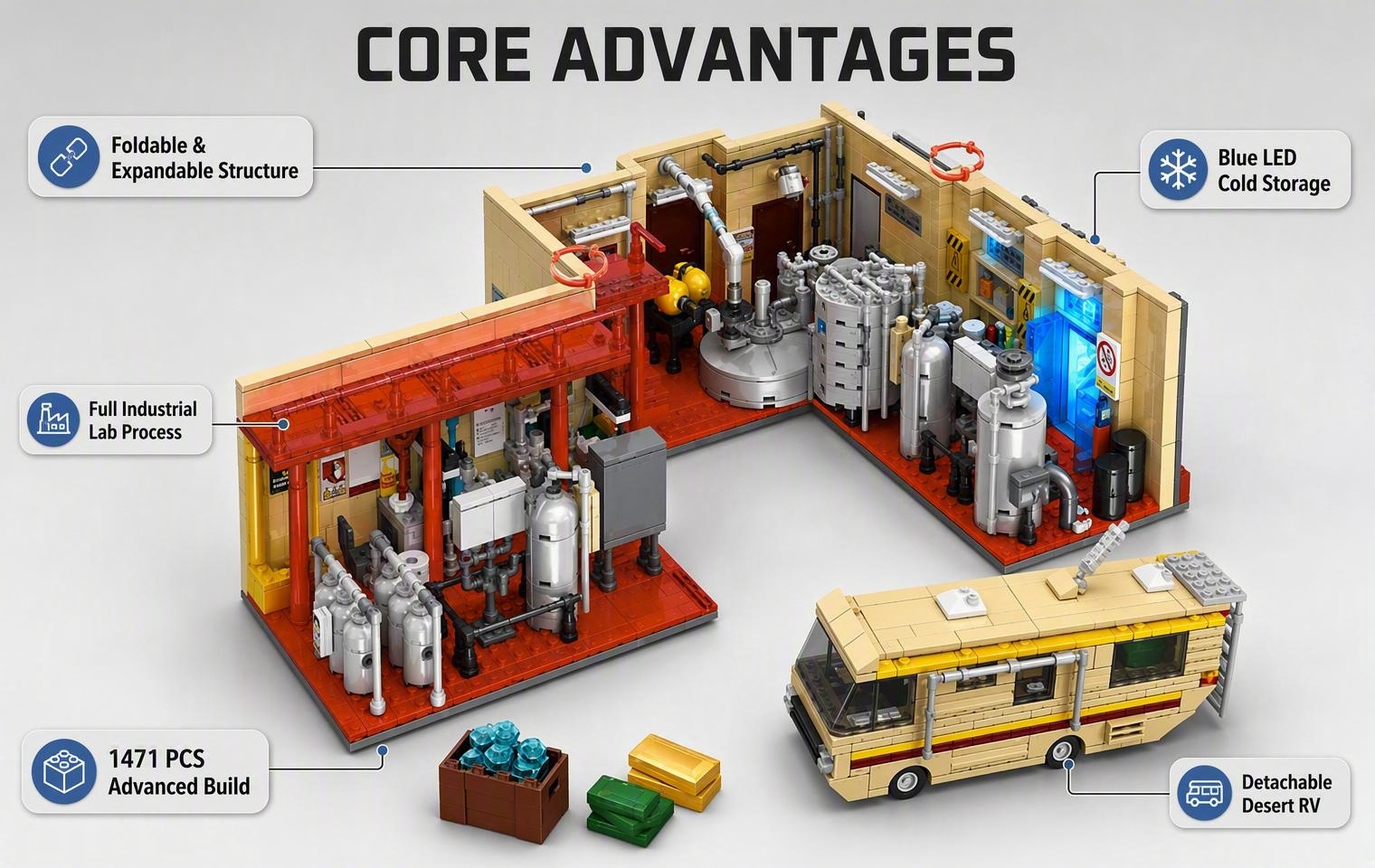
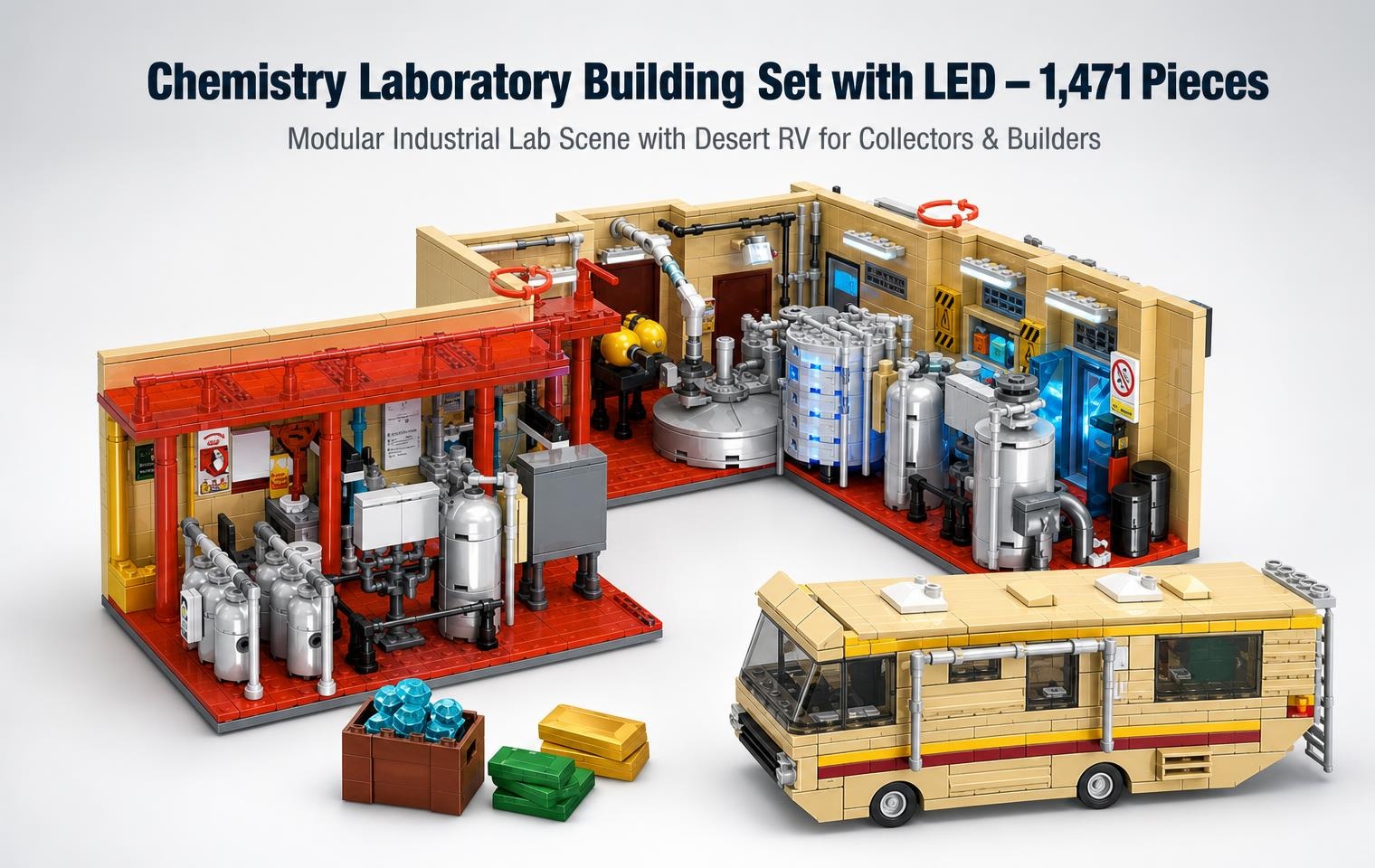
The current Chemistry Laboratory Building Set with LED lists an expanded size of about 23.6 × 9.6 × 3.7 inches. It includes a foldable laboratory, blue LED cold-storage component, separate removable-roof camper van, reaction tank, pipes, control equipment, accessories, and printed instructions. The listed age guidance is 12+.
- Use the expanded mode when interior zones and pipework are the priority.
- Use the folded mode when shelf width is limited or the model must be stored between viewing sessions.
- Reserve a separate parking position for the camper van.
- Leave hand clearance around hinges, the LED area, reaction tank, and removable roof.
Start With the Expanded Footprint
Measure the full 23.6 × 9.6-inch footprint on the intended shelf or table with painter's tape. Add space outside that rectangle for your hands and for the separate camper van. The 3.7-inch listed height does not include any extra overhead clearance needed to lift or adjust parts comfortably.
If a display case is planned, build first and measure the actual completed model before ordering a fitted cover. Small changes in hinge angle and accessory placement can affect the practical footprint.
- Mark the listed expanded width and depth on the surface.
- Open nearby cabinet doors and drawers to check interference.
- Test the normal viewing angle from standing and seated positions.
- Reserve an access side for folding and unfolding the connected modules.
- Choose a separate area for the removable-roof camper van.
Expanded vs Folded Laboratory Layout
Best for seeing the material storage, gas supply, workbench, reaction tank, monitoring controls, cleaning station, and LED cold storage as one readable process scene. It needs the full listed width and clear sight lines.
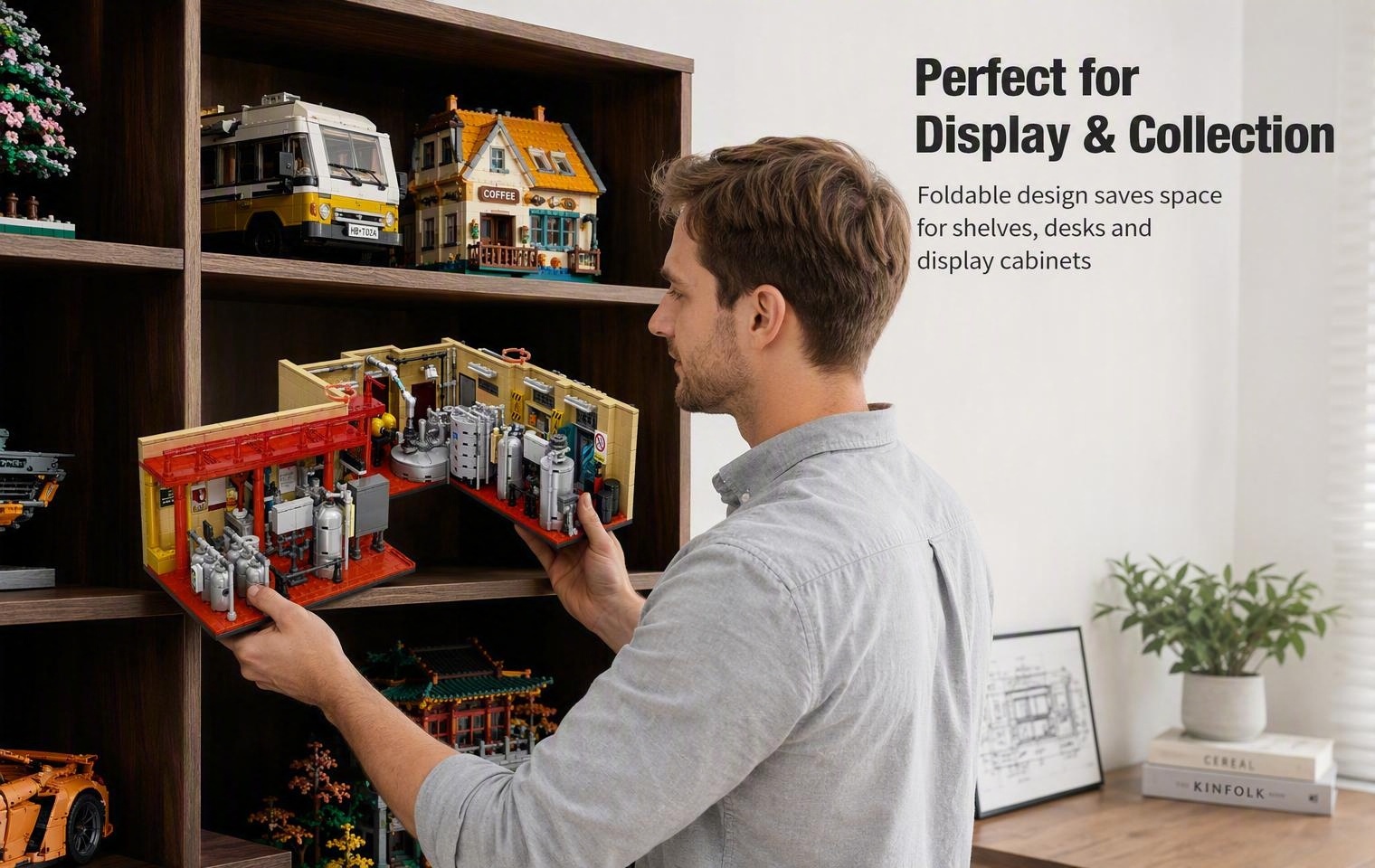
Best for narrower shelves and temporary storage. The hinged modules create a more compact arrangement, but some interior areas may become less visible. Fold only through the intended movement shown by the model.
Divide the Display Into Four Visual Zones
Process zone
Keep the reaction tank, gas supply, pipework, and controls visible as the technical center of the scene.
Work zone
Angle the laboratory workstation, protective clothing cabinet, utility sink, and cleaning area toward the viewer.
Cold-storage zone
Leave the transparent blue LED area visible and accessible. Do not bury the light behind the camper van or a tall prop.
Vehicle zone
Place the separate striped camper van beside the lab or slightly forward, with room to remove its roof.
A diagonal arrangement can shorten the visual width, but it may require more shelf depth. Test the layout with cardboard rectangles before committing to a cabinet or wall shelf.
Plan Access to the LED and Removable Roof
The product page identifies a blue LED inside the cold-storage room and a removable roof on the included camper van. Leave enough space to reach those features without leaning over the reaction tank or lifting the van by a small accessory.
- Route any supplied light component exactly as shown in the printed manual.
- Keep the access point facing the front or an open side of the shelf.
- Do not pinch lighting parts when folding the laboratory sections.
- Lift the camper roof by its supported edges and place it on a tray during interior viewing.
Choose a Base That Supports Both Modes
A rigid board or display platform can help move the laboratory without stressing its modular connections. The base should be wider and deeper than the expanded model, remain flat under load, and provide a non-slip surface. Do not carry the completed set by the overhead truss, pipework, tanks, or hinged walls.
If the model stays on a permanent shelf, use removable position markers for the expanded modules and vehicle. These markers make it easier to return to the preferred layout after cleaning or photography.
Fit the Model Into a Desk, Shelf, or Cabinet
Wide desk
Use the expanded mode at the rear of the desk, outside keyboard, drink, and cable routes. Place the camper van in front for depth.
Bookshelf
Use the folded mode or a shallow diagonal layout. Confirm that no module, truss, or van projects beyond the shelf edge.
Glass cabinet
Expanded mode works when the cabinet is wide enough. Check door swing, shelf load, reflections, and LED access.
Photo table
Open the model fully and leave space behind it for a plain background plus room in front for a phone or camera.
Move Between Layouts Without Losing the Scene
Before folding, remove loose props from the path of the modules and photograph the expanded arrangement. Support each base section, move the hinges gradually, and watch overhead connections and pipework. Replace the loose props only after the folded position is stable.
Reverse the sequence when expanding: clear the area, support the bases, open the modules, verify the connections, then restore barrels, bottles, and the camper van.
Questions About Laboratory Display Space
What is the expanded size?
The listing gives approximately 23.6 × 9.6 × 3.7 inches, or 60 × 24.5 × 9.5 centimeters.
Can the laboratory stay folded?
Yes. The current product page presents expanded and compact folded display options using the hinged sections.
Is the camper van attached?
No. It is listed as a separate model with a removable roof and miniature laboratory interior.
Is this a functional experiment kit?
No. The page states that it is a decorative building block model, not a real chemistry laboratory.
Measure for Expanded Mode, Then Enjoy Both Layouts
Mark the full listed footprint, reserve access for the hinges and LED area, and give the separate camper van its own viewing position.
Product details were checked on October 8, 2026. Specifications, packaging, lighting components, images, and availability may change. Follow the printed instructions and safety guidance supplied with the actual set.